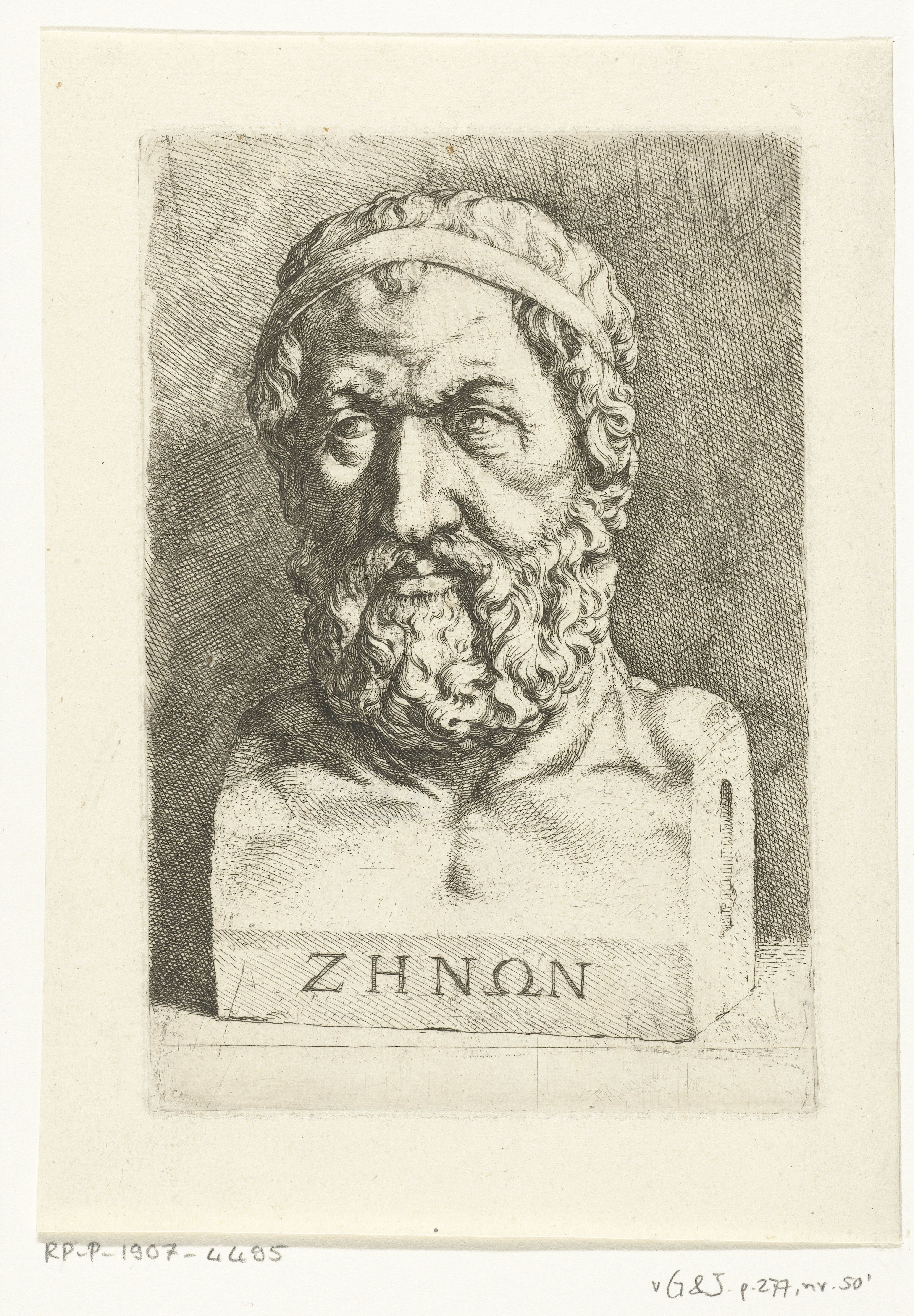
The first people to think about infinity lived back in the times of Ancient Greece. Zeno of Elea was a Greek philosopher who was born in 495 BC. He was the philosopher who came up with 2 different paradoxes that use the concept of infinity to argue that motion was impossible. These paradoxes obviously do not reflect our experiences in reality, but it was a great place to start thinking about infinity. I discuss Zeno’s paradoxes and the math behind them later on.
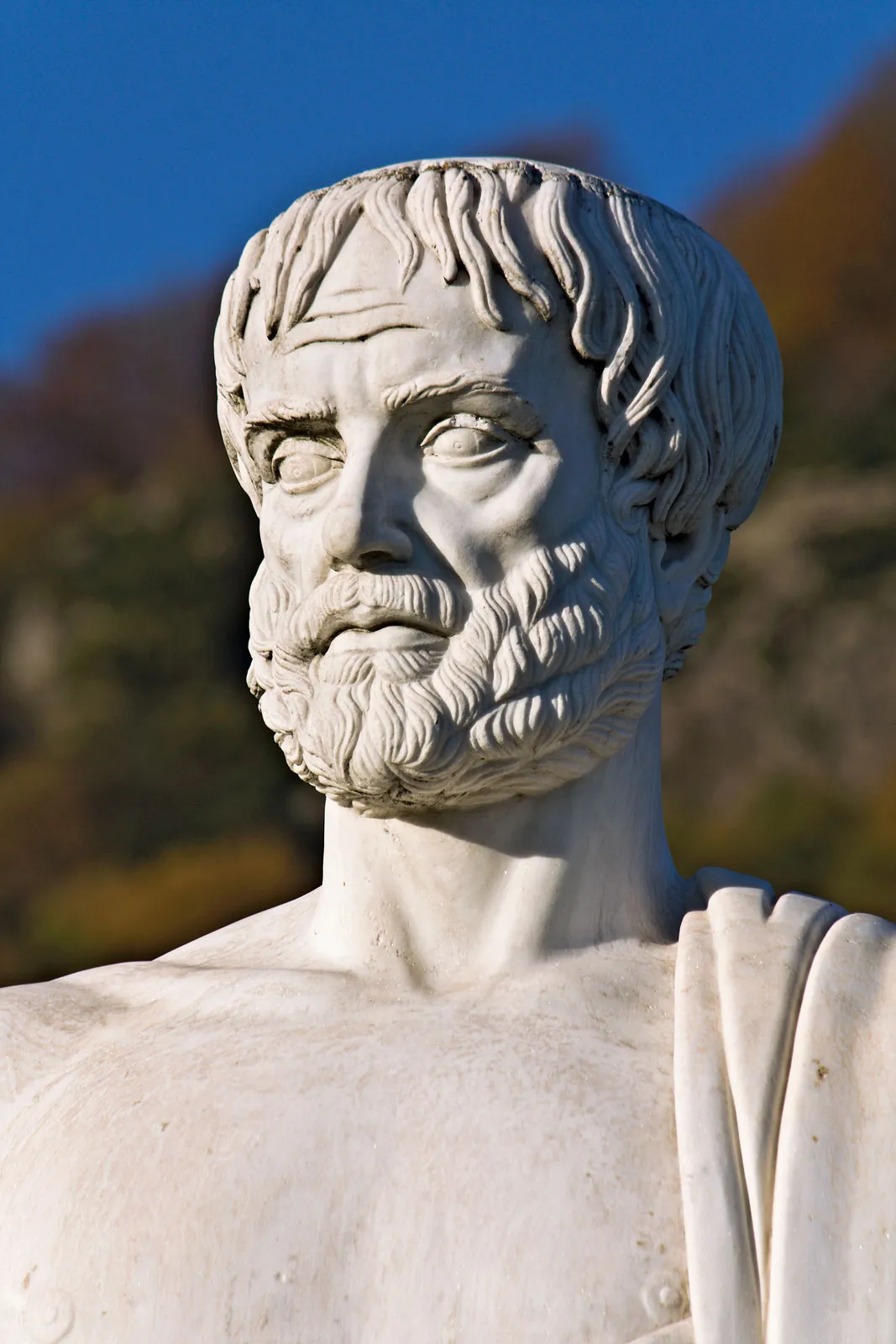
Another Greek philosopher who helped further the concept of infinity could be considered the LeBron James of ancient Greek philosophy. No matter whether it was politics, physics, or economics, Aristotle could do it all. Truly the GOAT. The Stanford Encyclopedia of Philosophy says that with regards to infinity “the most influential discussion was due to Aristotle” (Easwaran, Kenny; Hájek, Alan; Mancosu, Paolo; Oppy, Graham, 2025)
Aristotle came up with the idea of potential infinity and actual infinity. Potential infinity is more or less the concept of infinity that we still use to this day, which is simply a process that has no end. The idea behind actual infinity is a bit more complicated, which is the concept that something can be complete and exists as an infinite whole. Aristotle thought that the actual infinity caused too many paradoxes and inconsistencies (like Zeno’s paradoxes for example), so “beginning with Aristotle, … the vast majority of major philosophers and mathematicians rejected the notion of the actual infinite.” (Linnebo; Shapiro, 2017)
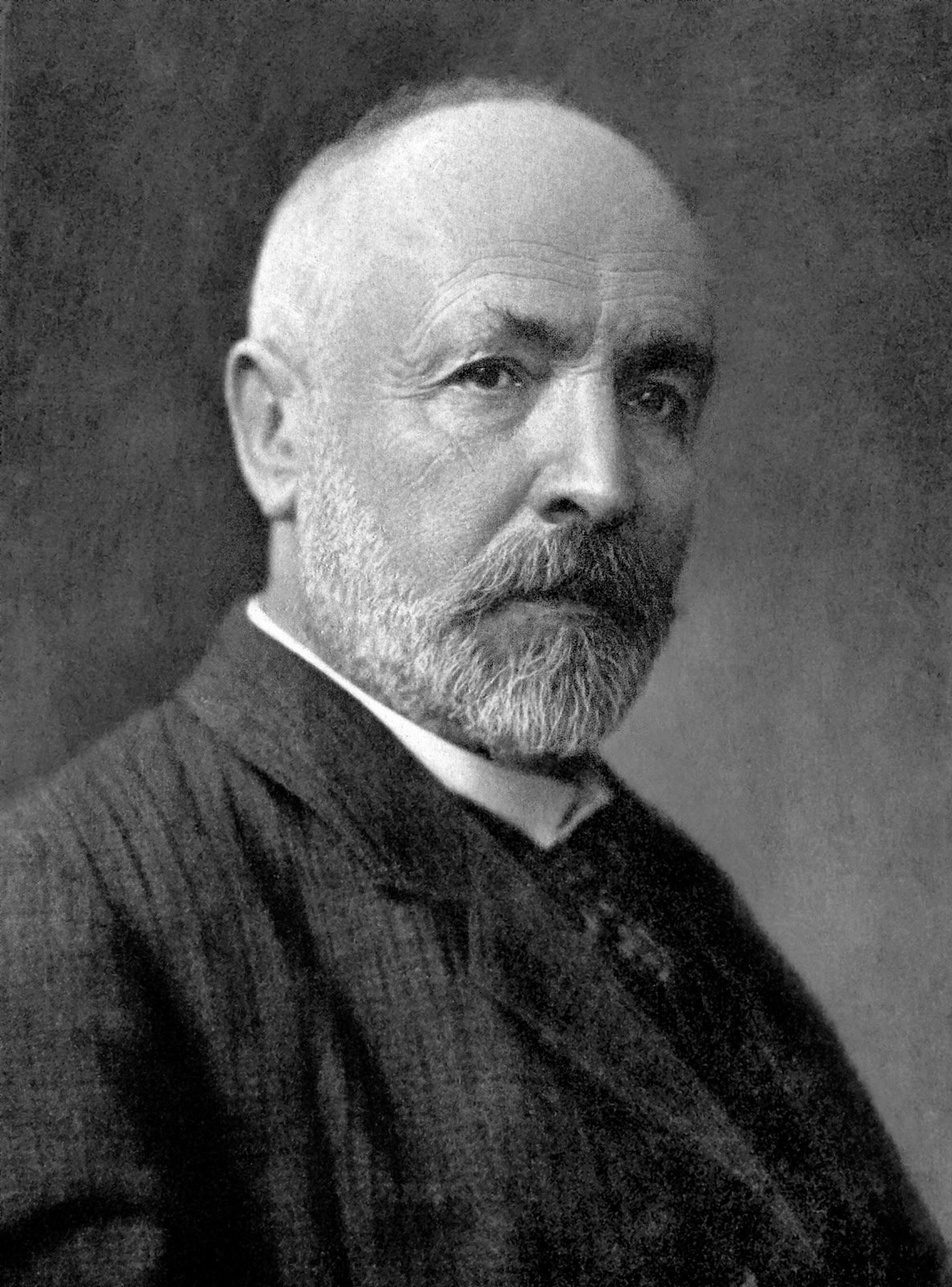
The theories of Aristotle were so revolutionary that they remained the definition of infinity for thousands of years. This was changed in the 19th century by Russian mathematician Georg Cantor who created set theory. Set theory is the “branch of mathematics that deals with the properties of well-defined collections of objects, which may or may not be of a mathematical nature, such as numbers or functions.” (Enderton, 2025). Cantor came up with the idea that infinity is not only a process like Aristotle argued, but also infinity could make up a set as a completed whole. By doing this, Cantor justified how actual infinity can exist.
The most groundbreaking discovery that Cantor made through his set theory is that different sets of infinite value have different sizes. Cantor’s discovery was revolutionary, however, it was also quite controversial as “many of his contemporaries rejected it out of hand” (Klarreich, 2003) and claimed that “Later generations will regard Mengenlehre (set theory) as a disease from which one has recovered” (Poincaré, 2025). Although critics were very skeptical towards Cantor’s set theory, as time went on, this was generally accepted as the truth behind infinity and became the foundation behind modern mathematics.