My Semester Project
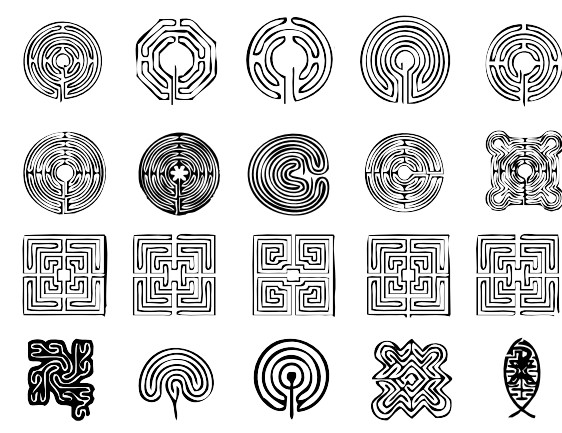
There are so many people still creating all sorts of programs and inventions that are based on labyrinths
and mazes. One source in particular says, As a result our labyrinthine structures may help in the visualization
and understanding of multi-variable texture maps. In the future, we also hope to animate our labyrinths and mazes
using video textures (Pedersen & Singh, 2006, p. 8). Another source shares a similar hope with the study of
labyrinths, We believe that the results reported here will not only allow for a new taxonomy in the study of
labyrinths, but also provide a useful tool to quantify complexity in other applications, such as computer games.
Furthermore, the generic methods employed here may be applied to other network problems, since any network can
be thought of as a set of sinuous paths, i.e. a labyrinth (Amancio et al., 2011, p. 4682).
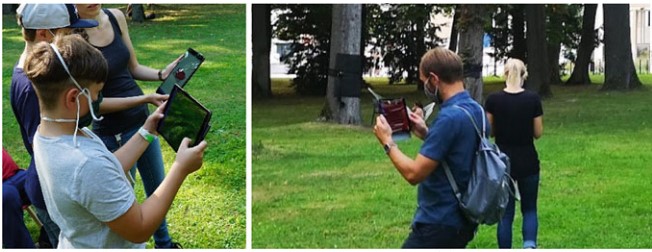
Another source conducted a workshop study that taught students to create mazes. Here are their conclusions,
Following the activities of the five-year-old explorer, being able to create mazes using building blocks
adds another perspective for younger students since no technical knowledge is needed to create the maze. As
the workshop seems to be a fun activity especially for early childhood, a next step could be to test the setting
with this age group in a task based design environment to investigate in depth. It would be interesting to see
which conclusions a student can draw from creating, investigating and solving a maze using AR and 3D printing
(Cai et al., 2023, p.29).
There are countless other sources that are using mazes and labyrinths to create art, puzzles, games, and
even interactive pictures. The history that these hold will always be a constant reminder of the importance
and significance of these beautiful complex mathematical concepts.
Back To My Main Page
Top Of Page