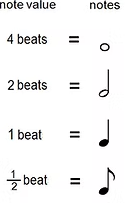
In some ways, it is easy to see math in music. Basic notes are based on fractions: a whole note lasts the length of a traditional beat, a half note is half of a whole note, a quarter note is a quarter of a whole note, and an eighth note is an eighth of a whole note. Fraction addition is also very obvious. Each measure is built of a specified number of beats given by the time signature, and the values of the notes in the measure must add to the required number of beats. But there is much more to the mathematics of music than that. There is basic geometry in even the surface level of music theory. But there is also so much set theory and combinatorics hiding behind the scenes of why music theory has been built the way it has.
As early as Medieval Europe, mathematics was building the foundations of music theory. There are two main perspectives to view music theory through, mathematically and poetically. Philippe Vendrix wrote an essay discussing how both perspectives contributed heavily to the Renaissance movement. Nolan summarizes, "the poetic model [of musical learning and theory], despite providing a useful means for conceptualizing music, did not revolutionize musical knowledge. The mathematical model, which already enjoyed a long history, was instrumental in the epistemological shift to modernity through its participation in the dichotomy of reason and sense" (Nolan 1). Thus, despite his argument of both perspectives, Vendrix ultimately came to the conclusion that it was the mathematical perspective that allowed music to flourish the way it did during the Renaissance. But equally important, the mathematical perspective also allowed music theory to stay relevant through the decades following the Renaissance.
That is why this project is dedicated to the exploration of the mathematics behind music. For as much as there is to learn of music theory through poetic exploration, there is so much more to be discovered through mathematical exploration. To learn the mathematics behind the curtain is to understand music more profoundly than even before.