The Sudoku game we know and love today dates back to the 1970s. However, the puzzle’s base comes from a concept called “Latin squares,” which goes back to the 18th century. Latin squares are grids filled with symbols where each symbol appears once, and only once, in every row and column. These symbols could be letters, pictures, numbers, or really anything.
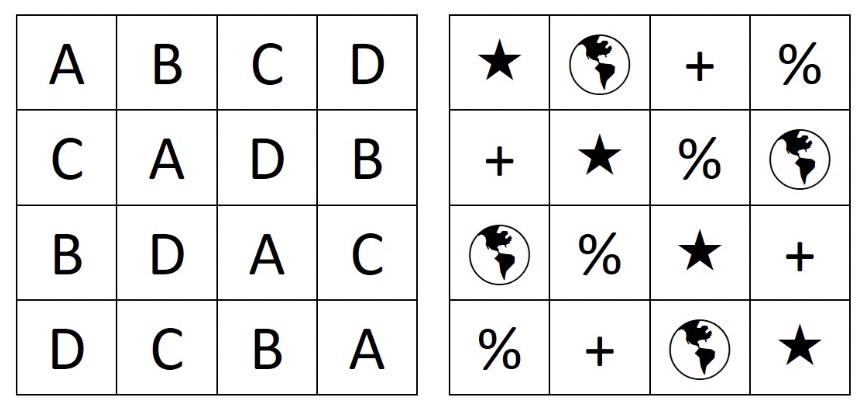 The modern Sudoku game started having its groundwork built during the late 18th century. Leonhard Euler, who was known for his involvement in graph theory, came up with the idea behind the puzzle. His idea was called “Latin squares,” which makes sense. Following the same rules used in Latin squares, he used numbers so that every number appeared only once in each row and column. Euler’s Latin squares also added more to the concept by including a partial grid that was already filled with numbers. This gave the solver a starting point and created a puzzle where they had to use logic and deductive reasoning to fill in the rest. This helped lay the foundation for the Sudoku we have today.
There were plenty of other similar puzzles that required people to solve for missing numbers, such as the “magic squares” that appeared in French newspapers. In 1979, a retired American architect named Howard Garns created a puzzle called “Number Place” for Dell Magazines. The mechanics of this game were very similar to those that came before it.
However, Maki Kaji, a Japanese man, later saw this puzzle and worked on improving it. He found funding to start publishing puzzles in a magazine. “The very first mass printable Sudoku was published in 1984, and it quickly gained popularity within the country” (Sudoku Conquest, n.d.). While it did grow in Japan, it would take more than a decade for it to reach the international scene. “Sudoku’s international journey began in the 2000s when British newspapers started publishing the puzzle” (Sudoku Conquest, n.d.).
After that, it quickly became a global phenomenon, appearing in books, newspapers, and game magazines. Everyone everywhere began playing it, trying to solve the puzzle made of missing numbers. Over time, many different versions of the game began to appear. There were whole books dedicated to it, electronic games people could take with them, and eventually apps on phones. Millions of people play the game today, and new puzzles of all difficulty levels are constantly being created. So many people love the game and the strategy, critical thinking, and fun that comes with it.