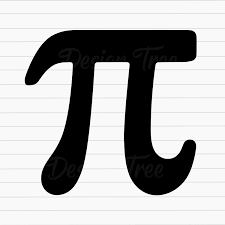
Well, here we are! We’ve learned the history, we’ve tried some methods, now the real question becomes: why in the world do we even care? As Posamentier and Lehmann say in their book, Pi: A Biography of the World’s Most Mysterious Number, “there is almost a cultlike following that has arisen over the concept of pi.” But why?
For one thing, the circumference and area of a circle can only be calculated if we have an accurate approximation for pi - the same goes for the volume and surface area of a sphere - and these four formulas have thousands of practical applications. We’ve used this number in countless places to create and explore the world around us. Look behind the cards below to discover some questions we can answer because of pi!
How much material does a manufacturer need to wrap a baseball in its outer leather layer?
How large are the planets and the stars?
What is the heat dissipation area of a spherical satellite?
How can we design pipes, wheels, and circular swimming pools?
How can we build domes, arches, and circular windows?
Another note of interest when it comes to this special ratio is that pi is just sort of a… well, a weird number. It’s irrational, meaning it cannot be expressed as the ratio of two integers (there does not exist a circle with a whole number circumference and a whole number diameter), but it is also
This means that it “cannot be calculated by a combination of the operations of addition, subtraction, multiplication, division, and square root extraction” (Posamentier & Lehmann, 2004). The fact that such a strange number is present everywhere in the world around us is an object of fascination for many!
I hope you enjoyed coming on this mathematical journey with me, and that you’re leaving with a little deeper appreciation for our friend, pi!