1852: The theorem was first proposed to Augustus De Morgan by a University of London student named Frederik Guthrie, on behalf of his elder brother Francis. De Morgan sent this conjecture to his friend and famous mathematician William Rowan Hamilton. It was soon realized that this seemingly simple idea was extremely difficult to prove, and it was of high interest to many mathematicians at the time (Thomas, 1998).
1860: Augustus De Morgan took the conjecture and his proof to America. This created interest in America amongst many mathematicians, including Benjamin Peirce, a famous mathematician and astronomer (Rogers, 2011).
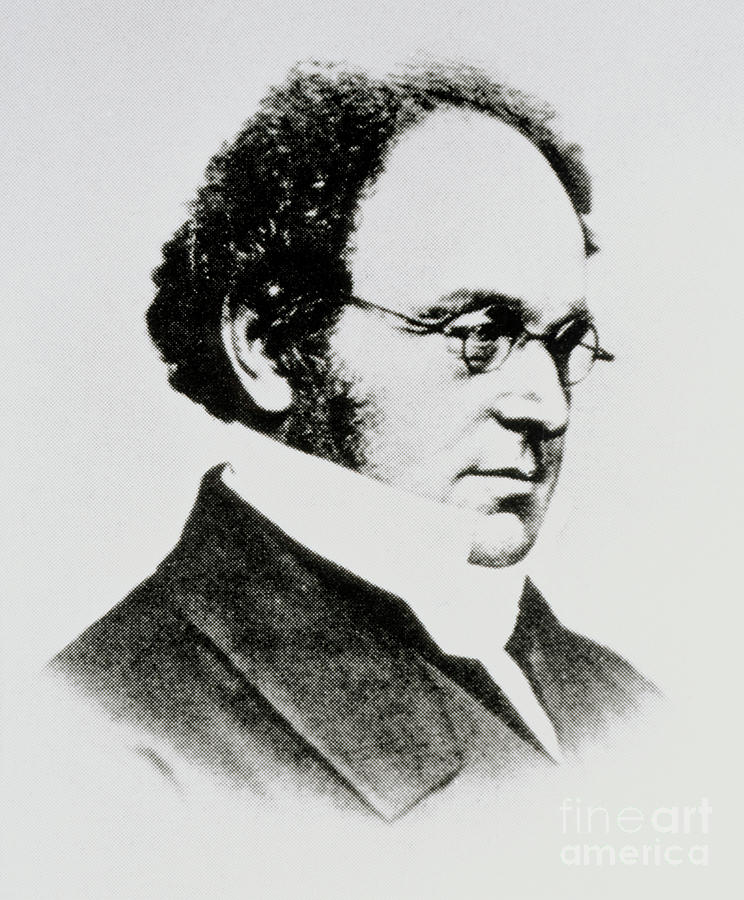
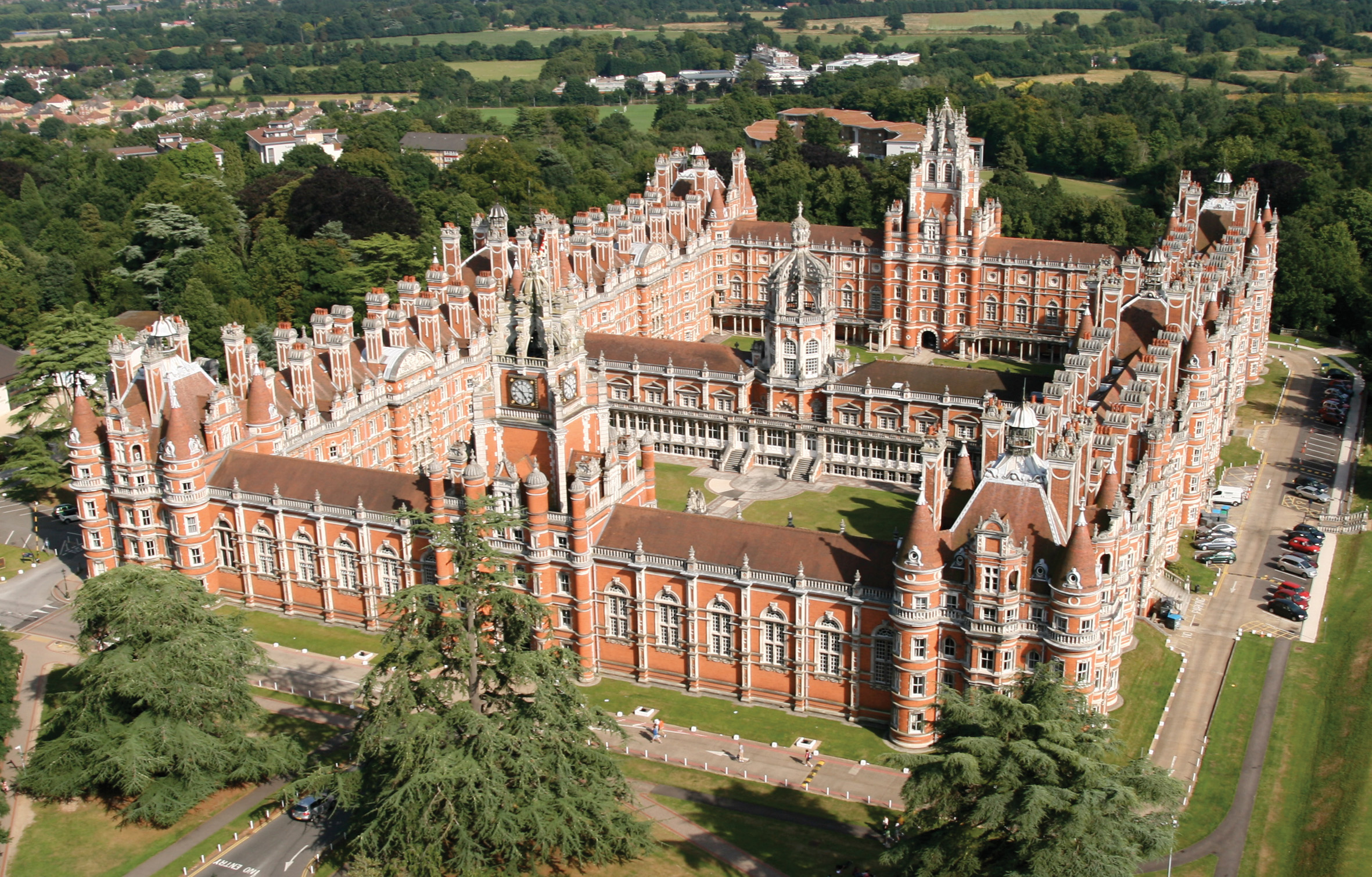
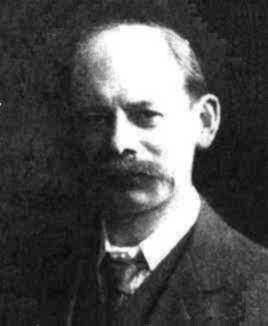
Augustus De MorganUniversity of London
1878: At the meeting of the London Mathematical Society, Arthur Cayley asked members if anyone had found a solution for De Morgan’s conjecture; no one had made significant progress. Cayley was interested in this problem and published the first printed reference of the theorem the following year about the coloring of maps. In this paper he explained why this problem was so difficult to prove and offered his own ideas of how to approach the problem. In his paper he wrote, “If a particular map is already successfully coloured with four colours, and we add another area, can we still keep the same colouring?” This question began another string of ideas which led to mathematicians trying to prove by induction (Rogers, 2011).
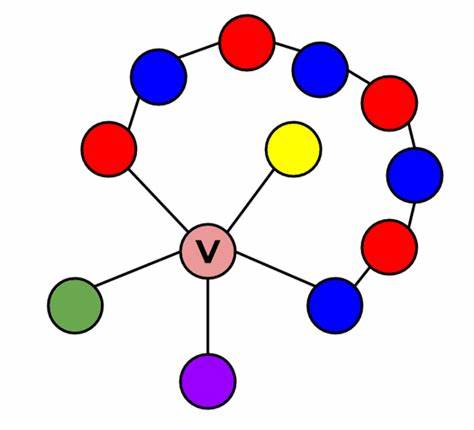
1879: Using the “Five Neighbours Property,” Alfred Kempe tried to find a proof of the four-color theorem. He developed a procedure called the method of ‘Kempe Chains’ to find a proof of the theorem. He published his proof in the American Journal of Mathematics. The following year, he found two more proofs for it that he also published. His proof stood for ten years before Percy Heawood found a flaw in the proof-method Kempe used (Rogers, 2011).
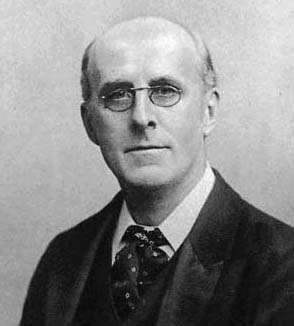
Alfred KempeA Kempe Chain Illustration
1880: Peter Tait published his own proof of the four-color conjecture, which was found flawed 11 years later. His proof method was still valuable, however, as he found an equivalent formulation of the Four Color Theorem in terms of 3-edge-coloring (Rogers, 2011).
1890: In the same paper that Percy Heawood pointed out Kempe’s flaw, he proved conclusively that all maps can be colored with five colors (Rogers, 2011).
1898: Heawood continued to work on the four-color theorem throughout his career. In 1898 he proved that if the number of edges around each region is divisible by three, then the regions could be colored with four colors. This proof shifted the focus of attention from areas of a map to the borders between them (Robertson et al., 2017).
Percy Heawood
First half of the 1900’s: At this time, mathematicians understood that any map could be represented as a planar graph using the concept of duality, where regions become vertices and edges connect adjacent regions. The Four-Color conjecture asks whether these vertices can be colored with four colors such that no two adjacent vertices share the same color. Mathematicians worked to reduce complex maps into special cases, in order to find a minimal set of configurations to test. Early efforts identified nearly 9,000 configurations, a daunting task that led to the development of computer algorithms to automate the testing process (Rogers, 2011).
1913: G. D. Birkhoff introduced the idea of using coloring of reducible configurations as a strategy to prove the theorem. He defined a class of maps and showed that if these configurations could be reduced to simpler cases that require fewer colors, then proving the Four Color Theorem could be reduced to checking a finite set of configurations (Robertson et al., 2017).
1922: Philip Franklin proved that the four-color conjecture is true for maps with at most twenty-five regions.This method was used by other mathematicians to make progress on the four-color problem (Robertson et al., 2017).
1930-40’s: Heinrich Heesch refined the concepts of reducibility and unavoidable sets. He developed systematic methods for identifying unavoidable sets of configurations in planar graphs and introduced the idea of using discharging rules to prove that certain configurations must exist in any planar map. He also proposed using computers to handle the vast number of cases that would need to be checked to prove the theorem, laying the groundwork for the computer-assisted proof by Appel and Haken in 1976 (Rogers, 2011).
1976: Kenneth Appel and Wolfgang Haken at the University of Illinois used these techniques to reduce the problem to 1,936 configurations and proved the Four Color Conjecture. Their work was independently verified using different computers and programs (Thomas, 1998).
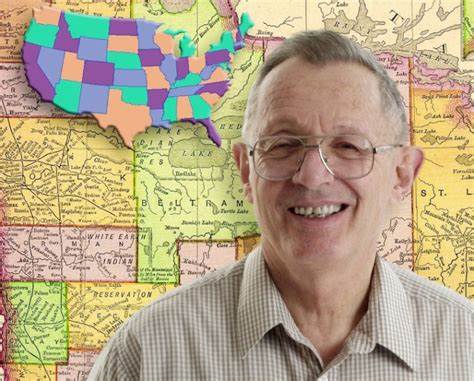
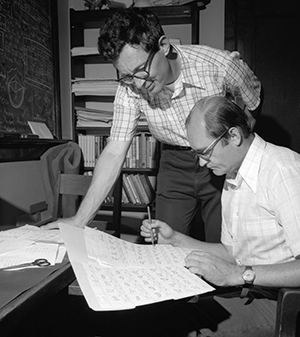
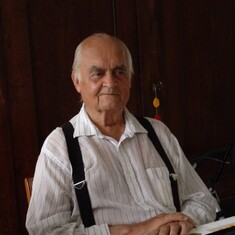
Kenneth AppelWorking TogetherWolfgang Haken
1994: Mathematicians made advancements and continued to refine the process. The unavoidable set has now been reduced to 633 configurations (Rogers, 2011).